Marriage Junk Food

It’s easy to get a Twinkie off the shelf, and eat it. Donuts are great, too. But they are not all that good for the body. 

Marriages have a lot of junk food options: Blame. Contempt. Resentment. Criticism. Name calling. Silence or Stonewalling. 

These actions, or reactions, all taste pretty good in the moment, but they don’t nourish us or our relationships. They are empty calories that make for an obese relationship. 

Getting healthy might not feel good in the moment, but it is worth it. Instead of Blame, take responsibility. Instead of contempt, celebrate. Forgive. Forgiveness chokes out resentment. A cheerleader (not necessarily the school kind) is always better to be around than a critic. 

What marriage junk food do you need to throw away?

The Viewpoint 1.3

The Viewpoint

Vol 1 Issue 3

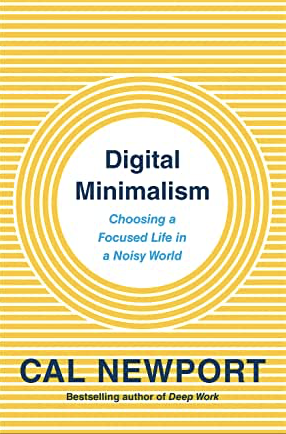
  1. Book Review: Digital Minimalism

    We are increasingly being bombarded with more and more technological inventions. Sure, some of these technologies do make life easier, but there is a lot of digital clutter in our lives. My main concern is that we’re becoming less human the more we interact with computers (programed by humans).

    If you’re concerned about technology habits in your life, this is a good book to get you started on better boundaries. (Andy Crouch’s book, “The Tech Wise Family” is more geared towards families. That is also a good book on this topic.)

  2. The Relationship in your Brain

    Some interesting thoughts here from Fast Company about how to help our brains work in solving problems during emotionally difficult situations. The two parts of the brain that are at fighting for resources/energy: The limbic (fight or flight — our “autopilot” survival system) and the prefrontal cortex (strategy, reasoning, thoughtfulness). When we’re stressed, in conflict, or feel like we’re in danger, the limbic system takes over in order for us to survive. Especially in relationships that matter, this is not a viable long term solution.

    The author talks about two key warning signs that we have moved into autopilot: Blame shifting, and negative assumptions. Both of these behaviors are about survival. The main problem with a survival first reaction: Everything and everyone is a possible threat. We may not cognitively think this, but our brain is reacting this way. I see this reality all the time in my work with couples. It is so easy to hear the threat and so difficult to actually listen to what’s being said.

    When we go to the gym to lift weights, we are building muscle and endurance. The same concept is true for relationships. When we exercise setting aside our need for survival, we can grow in our ability to operate in both the limbic and prefrontal cortex in our life and relationships.

  3. Leaving Social Media

    Do you have FOMO (fear of missing out)? Can you imagine never again logging into facebook, instagram, snapchat, or twitter? This is a great op-ed about why this author decided to leave social media.

    I’ve spoken and written about this before, but the great lie that social media promises is a more connected life. What it delivers is a more informed life at the cost of true connection with others. Humans don’t have the capacity to handle being omniscient (all knowing). That is a God attribute. Some studies are showing that anxiety/depression are linked to an increased use of social media.

    The bottom line is that we all need better boundaries (on sex, food, work, social media, etc), which makes for better relationships in our lives.

  4. Beauty From the Ashes

    I’m sure you heard about this, but it is a story that is worth retelling. A Dallas police officer enters the wrong apartment, shoots and kills a man, and has just recently been convicted of murder and sentenced to 30 years in prison. The public got a surprise at the hearing when the victims brother took to the stand to say some final worlds to offender. This is an amazing picture of grace and mercy. Watch the video here.

The Viewpoint is a weekly roundup of content I have come across throughout the week that is worth reposting. This content will often be an article or a book I’ve recently read, or something else that is of cultural significance. One of my good friends talks about the word “viewpoint” as nothing more than a view from a point. When we change our point of view (or sometimes the point of our view — which is a different issue altogether), we can see differently. Relationships grow when we are open to changing our view.

The Viewpoint 1.2

The Viewpoint

Vol 1 Issue 2

  1. Book Review: The Productive Narcissist

    The Productive Narcissist is a catchy title for a book that addresses a deeply complicated topic. Michael Maccoby, the author, is a long time therapist and consultant to executive leadership teams and companies. He brings a unique understanding to the challenges of Narcissism, and gives plenty of examples of these challenges from real world visionary leaders (Oprah, Bill Gates, Steve Jobs, etc). He also adds more detailed examples of his professional work with leaders and companies.

    His premise is that dynamic visionary leaders are Narcissistic in nature. The challenges that visionary leaders create either make them productive or unproductive in how they lead. Michael does a great job outlining the challenges that come inside organizations with a Narcissist at the helm. These challenges often create a perpetual chaos that is difficult to manage for others in their organization. Michael also talks about the different personality types that Narcissists attract to carry out the mission.

    This is a helpful book to read if your interested in learning more about narcissism, or more importantly if you have a narcissistic person with whom you are in close relationship. That might be a relationship in the work setting (boss or co-worker), a marriage/partner, or with a family member. Throughout the book, he gives practical tips and strategies for how to engage a narcissist, specifically in the workplace. More important than the tips, I think this book challenges the reader to have compassion for the narcissist in their life. It was good for me to read this book and remember what Plato said: “Be kind, for everyone you meet is fighting a fierce battle.”

    (It is worth noting the significant difference in someone with narcissistic personality disorder [NPD] and someone who has narcissistic traits. As imperfect humans, we all have narcissistic tendencies: Me first, grandiosity in the heights of our amazingness or in depths of our badness, and other traits. These tendencies don’t mean someone has NPD, which is why I recommend caution in using labels to describing someone’s character.)

  2. Study Shows Pressure Girls Receive from Boys to Send Sexualized Images.

    The NY Times ran an op-ed based on a recent study of 500 High School girls. The study found that only 8% wanted to send sexually implicit images to a boy. The rest (92%) of the girls did so out of being coerced, fear of conflict, or to acquiesce. Further research showed that boys are four times more likely than girls to ask for sexually explicit photos to be sent.

    I walked away from reading this article remembering how important it is to talk with both our girls and our boys about the dangers of technology and sex. The Netflix show “13 Reasons Why” does a great (though difficult at times) job of illustrating the negative impact illicit images can have on a teen community. The bottom line: We need to talk with our boys about not requesting the images, and we need to talk with our girls about not sending them.

  3. Parents Model Appropriate Technology Use

    Who needs a babysitter when you’ve got an iPhone? This article from NPR offers some practical tips on being a parent with technology. Before we start instructing our kids about their technology use, we need to look in the mirror.

    How much we’re on our phones while we are with our kids might have a lot to do with why they are on their phones so much. Consider having family boundaries around technology use in the evenings between dinner and bedtime. Alternatives to technology use (which is almost never communal in nature) that can foster memories and relationships: Puzzles, board games, neighborhood walk/hike, or exercise. Kids imitate the parents’ actions, not necessarily what the parents tell the kids to do.

  4. Wonder

    I’d read the book “Wonder” several years ago, which I’d highly recommend, but hadn’t watched the movie until last weekend. From start to finish, this is a fantastic movie that will stir up a lot of questions and conversations for both kids and adults alike. Wonder brings up themes of bullying, disabilities, identity, the family roles we play, loneliness, the pain of parenting, and the power of friendships.

    There was one scene that was particularly moving to me. The mom, played by Julia Roberts, is talking to Auggie (her son with a significant facial deformity) about his wish to be normal looking. It’s a powerful scene, made even more powerful when she touches her finger to his chest/heart and says, “this is the map of where you’re going, and your face is the map of where you’ve been.” A beautiful reminder to pay less attention to what we look like and more attention to who we are and who we are becoming.

The Viewpoint is a weekly roundup of content I have come across throughout the week that is worth reposting. This content will often be an article or a book I’ve recently read, or something else that is of cultural significance. One of my good friends talks about the word “viewpoint” as nothing more than a view from a point. When we change our point of view (or sometimes the point of our view — which is a different issue altogether), we can see differently. Relationships grow when we are open to changing our view.

The Viewpoint 1.1

The Viewpoint is a weekly roundup of content I have come across throughout the week that is worth reposting. This content will often be an article or a book I’ve recently read, or something else that is of cultural significance.

One of my good friends talks about the word “viewpoint” as nothing more than a view from a point. When we change our point of view (or sometimes the point of our view — which is a different issue altogether), we can see differently. Relationships grow when we are open to changing our view.

The Viewpoint

Vol 1, Issue 1

  1. You Are What You Watch?
    This article from the NY Times covers several interesting topics about the rise of television consumption. It’s a fascinating read that covers a lot of ground. The two topics of most interest to me were the social science research done about children and Sesame Street, and the affects on someone’s IQ based on the amount of TV watched.

    Television has changed dramatically in the last 5 years. On demand content and streaming services have created a massive library of accessible information and entertainment. As with any technological advance, the danger is in the use of the system without boundaries. I’m especially concerned for our kids and their parents marriage. The television (screens) offers the safest place of escape from relational hardships, and what we watch is impacting us far more than we realize.

  2. Fatal Stabbing Recorded by Dozens of Onlookers.
    Sad news this week out of New York about a fight that broke out amongst some High School students one evening that turned into a deadly stabbing. The troubling part of this story comes from the details that “dozens” (from the 50-70 that were present) other kids were watching and video recording the young man bleeding to death in the parking lot. Some of these bystanders live streamed the event, and others posted the video to their social media accounts. Share this story with your age appropriate teenagers (if your child has a smart phone, they are old enough for this story), and talk about what happened.

  3. Comedian Impersonates Tom Cruise
    I’m sure you’ve seen the gifted comedians that impersonate celebrities. It’s awesome to hear them talk like a famous person. What’s not awesome is to watch a video of an impersonation, and their face change to match the person they are impersonating. It took me several times watching this video to figure out what I was seeing was both real, and fake. First, watch this video, then keep reading.

    This is a technology that allows faces to be manipulated in a video. Think of it like photoshop for videos. This might not be news to you that something like this can be done, it wasn’t to me. But what was news to me was how subtle and real this appeared. After watching this, I’m really concerned with how this kind of technology can be used (and weaponized).

    Our society is losing it’s grasp on what truth it can stand on. There are significant implications now that videos can be manipulated to subtly appear as though “Tom Cruise” is sitting on that couch. With so much of our lives centered around a screen of some kind, how do we know what is real or what is fake? It is becoming increasingly important for real, face to face relationships to be a significant part of our lives. The less real relationship we have, the more we are going to be subjected to on screen manipulations (words, news, videos, etc).

Thanks for reading this week’s version of The Viewpoint. If you’ve read something of interest, please let me know. Thanks and have a great weekend.

Parenting is Not About Safety

Ask any parent, and if they are honest, they will agree: Parenting is impossibly hard. As my 4 year old was running away from me one night, screaming at me as he ran, I realized why these relationships are so hard: My personal desire to be safe and comfortable is threatened by my kids.

I’ve invited and co-created these little humans into the world. I’ve fed them, hugged them, disciplined them, and have done my best to love them. Ultimately, though, what I have given them is a part of me. They walk and run around this world with my heart draped over their shoulders…without any clue as to what they are carrying.

The reality of being unsafe with them comes alive in moments of panic. When my 9-month old is choking on something he’s found under the dining room table, I become aware that his life contains a part of me that I’ll never have back. If he goes away, so does his portion of my heart. It’s why a child’s scream of terror or pain makes me move with the speed of a superhuman. When my son falls off the the top bunk bed at night, I’m in his room quicker than his tears. When they hurt, I hurt.

My heart is with them, and that does not make me feel safe. They will do as they please. They have the same free-will as I do,  and I really don’t like them for that. In fact, I often resent them for being human. Sometimes, I wish they were robots, doing as I say, playing nice, and behaving on behalf of what’s right. I want them to be safe, so I can be safe.

But really, safety is just an illusion. Our cars have airbags, but at 75 mph on an interstate, compressed air isn’t going to keep me safe. An airplane has seat belts, but that doesn’t change the fact that I’m in a rocket with wings going 500 miles per hour 30,000 feet above the ground. I lock my house at night, but a deadbolt is not going to keep a tornado at bay, nor the rising waters of a flood.

Much of life is building and creating supports that give us the illusion of feeling safe. Kids don’t factor into that illusion. This realization is clearly understood by most parents. Kids are humans, and they’re going to do what they think is best, or whatever pleases them. There’s nothing I can do to really be in control of them. This reality coupled with the gift of my heart to them creates a mess. If I want to be safe, I must control them; if I am okay not being safe, I must find a way to cope with inevitable pain. This is a sobering truth for every parent.

It’s sobering, because I know that I often try to control them. I try to get them to stop smacking their food, stop eating pizza on the couch, and stop fighting as they brush their teeth. When I realize that I can’t control them, I get jealous (Hey, if you can’t beat ’em, join ’em, right?). I’m jealous that they get to be the kids and I have to be the grown-up.

I think life as an adult is lived within the infamous 80-20 rule: Eighty percent is doing things we have to do, and 20 percent is doing things we want to do. That equation is the opposite for kids. To be an adult, we cannot play 80 percent of the time like our kids. And this is a big problem for most of us adults. We don’t want to do the 80% work that life requires. We want easy, and 80% work is not easy. The result … numbed-out adults.

Kids aren’t numb (depressed), rather they feel and express. Kids’ expressiveness in life challenges adult depression and adult self-absorption. Adults want to go to sleep, figuratively, and when a kid wakes them, we adults feel a rage of being roused from the comfy sleepy world of depressed self-absorption. Getting angry at a kid for being curious, playful, and expressive is like getting mad at water for being wet, shapeless, and messy.This is why parenting is so hard: As a parent, I can’t keep my kids from being kids and I can’t always keep them safe, which means I will suffer and hurt when they do.  Our children invite us to see the world through untamed eyes. It’s both wonderful and frightful. Parenting is about helping kids become adults tomorrow while holding onto the hope, wonder, curiosity, and awe they live with today.
Mainfest: The Mad Farmer Liberation Front

Manifesto: The Mad Farmer Liberation Front
by Wendell Berry

Love the quick profit, the annual raise,
vacation with pay. Want more
of everything ready-made. Be afraid
to know your neighbors and to die.

And you will have a window in your head.
Not even your future will be a mystery
any more. Your mind will be punched in a card
and shut away in a little drawer.

When they want you to buy something
they will call you. When they want you
to die for profit they will let you know.
So, friends, every day do something
that won’t compute.

Love the Lord.
Love the world. Work for nothing.
Take all that you have and be poor.
Love someone who does not deserve it.

Denounce the government and embrace
the flag. Hope to live in that free
republic for which it stands.

Give your approval to all you cannot
understand. Praise ignorance, for what man
has not encountered he has not destroyed.

Ask the questions that have no answers.
Invest in the millennium. Plant sequoias.
Say that your main crop is the forest
that you did not plant,
that you will not live to harvest.

Say that the leaves are harvested
when they have rotted into the mold.
Call that profit. Prophesy such returns.
Put your faith in the two inches of humus
that will build under the trees
every thousand years.

Listen to carrion — put your ear
close, and hear the faint chattering
of the songs that are to come.

Expect the end of the world. Laugh.
Laughter is immeasurable. Be joyful
though you have considered all the facts.

So long as women do not go cheap
for power, please women more than men.
Ask yourself: Will this satisfy
a woman satisfied to bear a child?
Will this disturb the sleep
of a woman near to giving birth?

Go with your love to the fields.
Lie easy in the shade. Rest your head
in her lap. Swear allegiance
to what is nighest your thoughts.

As soon as the generals and the politicos
can predict the motions of your mind,
lose it. Leave it as a sign
to mark the false trail, the way
you didn’t go. Be like the fox
who makes more tracks than necessary,
some in the wrong direction.

Practice resurrection.

“Manifesto: The Mad Farmer Liberation Front” from The Country of Marriage, Harcourt Brace Jovanovich, Inc. 1973. Also published by Counterpoint Press in The Selected Poems of Wendell Berry, 1999; The Mad Farmer Poems, 2008; New Collected Poems, 2012.

Learn to Struggle

I ran across an article about a chess player (Adam Robinson) who was in a chess development program for teens. He spoke of playing against Bobby Fischer (one of the greatest chess players in history). In playing Bobby, he would often lose. It was this short paragraph that struck me:

“As young teen I played thousands of speed games (each side 5 minutes) with Bobby Fischer, greatest chess player in history. If he got edge early (and my defeat obvious) I’d resign on spot to play again. Stopped me once and said “Don’t resign. You have to learn how to play bad positions.”

Think about what he just said for a moment. Some could argue that chess is just a game, but I think this quote shows that it’s way more than that. “You have to learn how to play bad positions.”

That is the story of life. It’s not always going to go well for you, and if you always resign when it doesn’t go well, you’ll be way better at quitting than you will at succeeding. I love to play golf, and it often happens that when I hit a bad shot (or many bad shots), it takes a lot of emotional and mental work to change the measure of success.

Learning to struggle is just as much a process as it is in learning to win. Most don’t struggle well because they’ve never learned it (and/or never been taught). Don’t resign. Don’t give up. Struggle well. Playing from a bad position can teach us valuable lessons about life that grows our capacity for success. What is it that you’ve been too easily giving up on that you need to struggle with and change your definition of success? 

Kids and Self-Esteem

Another result of kids not knowing their place, or their usefulness in the family, is low self-esteem. Low self-esteem happens for our children when we, the parents, don’t allow our children to wrestle with the normal realities of life. Making decisions for them and not allowing them to fail prevents children from developing the necessary internal resources that are vital to identity and self-esteem.
As parents we can’t teach our kids things that we ourselves do not know. It’s likely that a parent with low self-esteem will not be able to allow their children to struggle with life because they themselves don’t feel confident in their own life struggles.
This is a but a small reason why parenting is so hard: Our kids expose our vulnerability and weakness.
Instead of growing these weaknesses in ourselves, it’s natural to take the easy way out and do things that ensure our kids cannot expose our weakness in the future.
Good parenting is about allowing our kids to organically point things out to us that we then address and mature instead of punishing or controlling our kids. The difficulty is that kids are unknowingly walking around as a mirror to us … and we don’t like it.

Six Languages of Relational Intimacy

Below are six languages that help speak to the building of an intimate relationships. We cannot build healthy intimacy and thriving relationships without practicing some of the below ideas. As with anything in life, practice makes progress (not perfect!).

Passion – This is the language of “I want and desire more.” Shame tells us that we ‘should’ do or we “ought to” get more.  Should is a shame word that negatively influences our relationships. Instead of saying “I should,” say “I want” or “I desire.” Own what you want, don’t be a victim to your own desires.

Presence – This is the practice of saying “I am here, emotionally engaged.” Escape is easy through TV, internet, food, sugar, devices, alcohol, drugs, and other substances. When we hide, we are not present and engaged with others in our life. Life is full and busy, but these are the choices we make. If you’re not present, cut back on distracting habits or commitments.

Resolve – This is the idea forward of, “I will finish what I start and follow through.” Self-sabotage or procrastination are the works of fear and shame. Afraid that we’ll fail, or that it won’t be good enough (shame). Another idea is that we sabotage success because we don’t feel worthy (another experience of shame). Do what you promise to yourself, and to others.

Vulnerability – This is the language of “I will risk showing you my true self. I will not hide.” Nothing promotes intimacy more than vulnerability. We shy away from the true desires of our heart because not everyone is safe. If you risk nothing, you will gain nothing.

Help – This is the language of “I will ask for help.” Asking for help is scary because it puts us in the position of being rejected. Like vulnerability, if we do not ask for help, we will not be helped.

Honesty – This is the language of “I will tell the truth, regardless of the consequences.” This is a core issue in unhealthy relationships. Telling the truth isn’t just about what we have done, it includes what we have felt and thought. Telling the truth often has devastating consequences. Flannery O’Conner says, “you will know the truth, and the truth shall make you odd.”

Which one(s) of these do you need to work on?

Wildflowers of Marriage

The great philosopher Forrest Gump famously said, “life is like a box of chocolates, you never know what you’re going to get.” The great thing about those chocolates is that you can bite into them, and if you don’t like what you got, you can choose another one.

Many people think something similar about marriage, too. If I don’t like the flavor, I’ll get rid of it and get a new one. I wrote last week about life being like a garden, and the similarities between the two. You have to prepare, plant, tend, water, weed, prune, pick, and a host of other actions for a garden to grow. Gump was right with his assessment about life.

A similar metaphor for marriage is wildflowers. If you go to a flea market, garden shop, or any other store that sells garden seeds, you’ll find a package of seeds titled: Wildflowers. There will be a picture on the package showing you what it is that the seeds produce. Different than that of any other seed package (corn, beans, or other flowers), you don’t really know what the contents will produce. The only way you can know is to buy the package, and go plant the seeds.

Marriage is just like this. We can think we know what flowers will grow from the package, but we can’t know until we marry, plant, tend, and grow the flower garden. The big challenge is when we get the results: The flowers bloom and sometimes they aren’t what we wanted, expected, or feel like we deserved.

It’s at this point that a person’s character begins to show up. What will you do with getting something that you didn’t want? How will you handle the loss, disappointment, anger, hurt, and resentment? Will you tear up the garden, destroy all the flowers/plants that have grown? To what extent will you try and control what has happened to you?

The beauty of marriage is that it reveals who we really are. We don’t need a host populated world like the show Westworld to show us who we are. Marriage does that well enough on it’s own. What will be revealed in you when you don’t get what you want?