On Being Needy

I think most people would agree that no one wants to be a needy person. We usually distance ourselves from those who have little to no ability (as adults) to help themselves. The problem is, that we are all people of need, and this is a very uncomfortable position. If I admit to needing something (which is different than wanting), this means I don’t have the ability to self-produce everything for my life.

My inability to self-produce all that I need for my life is evident at every moment of the day. I need oxygen to survive and there is no way for my body to get oxygen without breathing … which is an involuntary action. I can only tell my body to stop breathing for so long, and then it takes over and starts breathing again. I am not in complete control over my body, nor anything else in life.

Our needing help from others is like breathing. If you stop breathing as much, you will become a burden to others. This is the same with our relational and emotional needs—if you stop needing relationship with others, you’ll become a burden. No one wants to be in a relationship with an overly needy or needless person. Sure, we often complain about how needy others are around us, but the reality is some of these needs are exactly what draws us to people. (It used to be that we needed others to tell us what our faces looked like because we had no ability to see ourselves — technology has removed that need, among other things)

I feel useful, which is a sense of self-worth, when I am able to give something that I can do to someone who doesn’t have that ability. Certainly we can get caught up in becoming addicted to helping others (codependency), but at the heart we all need to give away that which is a natural resource within us. Our resources are there not to keep to ourselves, but to share with others. When I’m able to share my natural abilities with others, it’s a gift from them.

I don’t feel all that useful when I’m asking for help. It’s hard and vulnerable to ask for help, but it’s also a gift. If I don’t ask for help, I’m preventing someone else from the ability to share their resources with me. Not asking for help is incredibly prideful and selfish. Relationships won’t last long if you withhold needs.

Letting Jealousy Help

Growing up, I always understood jealousy as something to be avoided like the plague. It was a sin, and we weren’t supposed to feel it. The message I remember hearing from church/parents/adults was: If you’re jealous, something’s wrong.

As an adult what I’ve found is that I cannot prevent feeling jealous. Jealousy is not a feeling that is insignificant enough for our human minds to be able to outsmart or control. If there was nothing else to it, jealousy is not a helpful feeling in life, but I stop at the idea that jealousy makes you a bad person. It really can limit (sometimes destroy) a relationship because jealousy is always about lacking something in comparison to others.

The intensity of our jealousy is equal to the intensity of our own desires to have what others have. Instead of shaming the jealous feelings — by trying to ignore, numb, or shut them out — pay attention to what the jealous feelings are actually about.

For instance, let’s say I’m jealous that a friend is starting a hat-making business. It may be that I want to start a business (not necessarily a hat-making one), or that I just want out of the corporate world where I’m working for/on someone else’s schedule or money. If I shut down the jealousy because it’s a bad thing to feel, I’m going to miss out on facing up to the truth of my own desire to start a business. I see this in my own story, but also in so many other people’s lives as well: We get too caught up in the shame of what we feel that we miss out on truth.

The best way that we can eliminate our jealousy is to act on the desires that are hidden behind feeling jealous. Create something. Start small. Don’t overthink it. Pursue the relationship, or get your idea/product out into the world in a first edition/version, then revise and edit. Don’t let jealousy stop you, let it help you.

I Want a Safer World

I want a safer world. I want a more competent God. Then I remember that God’s power is not a controlling but a redeeming power–the power to raise the dead, including those who are destroying themselves–and the red blood of belief begins to return to my veins. I have faith. I lose faith. I find faith again, or faith finds me, but throughout it all I am grasped by the possibility that it is all true: I am in good hands; love girds the universe; God will have the last word. – Barbara Brown Taylor

The Way We Heal

The way we heal the wounds in our lives is to tell the story. Tell the story of your harm over and over again until you are no longer limited and harmed by what has happened. This is the essence of therapy … to become familiar with our own truths (and lies) and live honest and peaceable lives.

You cannot do this alone. We are not unbiased about our wounds, nor the words we use to describe our experiences. We need others to hear our stories, and to help us to see parts that we’d rather not see. Parts that we hate.

Untold stories (secrets) poison our hope, dreams, and relationships. Yes, there is much pain in these stories but pain is only there because there has been a fracture of relationship. Just like cold is not it’s own created thing, it is the absence of heat, so too is pain. Pain only exists because a relationship (love) has been broken.

If we cannot forgive those we hate the most (and this doesn’t mean that we have to like the person we’re forgiving), we will never be able to accept the forgiveness of others. Telling our secrets—our stories—is the process of grief, of forgiveness.

Project Parenting

What is your goal for parenting? Is it to just “survive” the process? Or perhaps might it be to “make sure I don’t screw them up too bad?” I often joke with friends that I don’t have a college savings fund for my kids, I have a therapy savings fund. My kids will probably need twice the therapy to work through their dad being a therapist. Bless them.
 
“What is your goal?” is an important question that I don’t think about a lot, but whatever my stated or unstated goal is, it drives my attitude and actions towards my kids. There are many days that I get home from work and don’t want my kids to be kids. I love them dearly, but goodness they can make a mess of things. Kids force me to see that life doesn’t work by my rules, nor does the world revolve around me (despite my best efforts to make it so). This is a big reason why I (and you, if you’re honest) both love and dislike my kids: They alert me to my self-centeredness. 
 
Poor parenting happens when my goal for life as an individual, a selfish person, is different than my stated goals for my kids. When I don’t pick up my shoes and socks on the living room floor, but get onto my kids for not picking theirs up, I’m not being a good parent. Living life with different standards will teach kids that duplicity is an acceptable way of living. 
 
Becoming a parent is a two-fold challenge (and there’s probably more folds than this). First and foremost, we have to learn how to raise the kid inside all of us. We have to be kind, respectful, loving and at the same time tough, hold boundaries, and be willing to say no to that part of us that wants instant gratification. We cannot be helpful parents until we have first learned to parent ourselves. 
 
The second challenge is to raise our kids as unique individuals with similar and different challenges in life than what we ourselves face. Parenting our kids as though they wrestle with the exact struggles as we do is myopic and not helpful guardianship. 
 
My goal as a parent is to be a guardian of my kids’ true selves. Said more simply: I want to help my kids find out who they really are … not just what they love to do, but to believe in and be able to express the uniqueness of their own voice. 
 
Most days, I get caught up in training my kids to be good performers. Showing them what is good and bad from a perspective of human doing. The days when am content with them are when I’ve not tried to control or train them like I would an animal, rather that I’ve allowed them to speak their own creative ways. 
 
One final thought. Err on the side of being in relationship (not a friendship) with your kids, that’s the only way you’ll thrive together once they are no longer under your care and protection. 

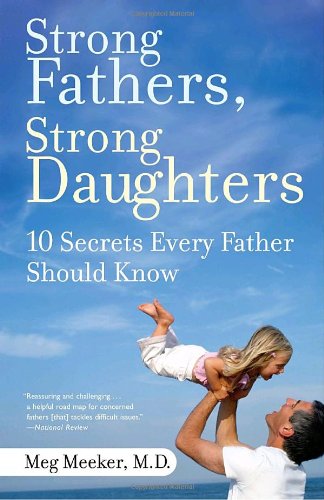
Book Review: Strong Fathers, Strong Daughters

371fe__51vm4spIX8LDad’s beware: Reading this book will likely provoke anger, shock, shame, guilt, and fear. There are stats and eye-opening realities that the author presents suggesting the current and future perils our daughters will face in the world. For this reason alone, dad’s need to read what Meg Meeker has written. Yes, it’s a shock to the system, but that is sorely needed. While this is a book catered to dad’s with daughters, I think it’s a book that all parents need to read.

Some of material Dr. Meeker talks through is in regard to relationships, not only between dad’s and daughters, but also between daughters and boyfriends. Parents of all boys would be wise to read this because of the unique insights into the needs of young women. It takes a village to raise a child, and by engaging with our boys we will be setting up the girls to be treated respectfully and decently.

One thing I did notice about the book that seemed a bit heavy handed was the sole emphasis on the role of the dad in the daughters life as the most important parental relationship. While this may have been done intentionally to get through the “thick heads” of many men, it does leave a gap as to the importance of mom in the parental relationship. I don’t think Dr. Meeker would say that the mom isn’t important, but it’s omission was notable. This will undoubtably be offensive to some, but does not discredit the overall merit of the book.

I appreciate Dr. Meeker’s call to action, specifically to make dad’s aware of the overwhelming need of their presence in their daughter’s lives. Being engaged with their daughter is likely something already overwhelming for dad’s (at times, I feel this way with my daughter), which is why this point is made over and over again throughout the book. I agree with the reality that daughters need their dad’s to be present and to show up with them. Too often I hear of grown women lament their dad’s absence as a key factor in their lack of self-esteem, self-worth, and self-image.

This is a must read for all dad’s with daughters, regardless of their age. The stories she shares really help to bring home the heart of her writings, which was extremely helpful as a reader to put flesh on the ideas she presents.

Growing Up in Marriage

Author and speaker David Erickson recently said, “There is a child in me always seeking to destroy the man that I am.” As I sat with Josh and Katy a couple of weeks ago, I remembered what David said because it fit Josh and Katy perfectly. They had only been married a little over a year, but by the way they were treating each other one would have thought they were mortal enemies.

Just before their current argument escalated to war-like proportions in my office, I stopped them and spoke David’s words to them.”Josh and Katy,” I said. “There is a child inside both of you that is destroying this marriage.”

It’s easy to shame someone, especially when speaking about another’s immaturity or childishness, but my words to them were not about shame, they were about truth. Josh and Katy were both acting like four-year-olds who didn’t get a candy bar at the grocery store.

They were blaming each other for their unhappiness, and both were sounding like a whiny kid. They agreed with my observation and then chose to behave as adults for the remainder of the session. It was productive only because of this choice.

I recently wrote about approaching your marriage as though it is the first child. Taking this approach requires nurturing, patience, and tenderness. I want to piggyback on this idea and speak to the challenging side of seeing your marriage as a child. Children need to be taught, grown up, and loved well so that they don’t get their way. Dan Allender says that children are always asking two questions: “Am I loved, and can I get my own way?” Love means we sometimes say no, that we do what’s hard, not what’s easy. Ultimately, love will result in the greatest opportunity for growth. This is the challenge for marriages: To love the boy/girl inside each other so that the man/woman can be grown up and flourish.

Josh and Katy’s relationship is alarming to me because they are a microcosm of a larger problem for the newly married. The overarching theme I continually see in my work as a marriage counselor is couples’ inability, or outright refusal, to empathically view their spouses problems, hurts, and desires. In simple terms, this inability or refusal is childlike behavior. Adults do what is hard, children do what is easy.

I recently heard a comedian talk about the current generation of teenagers only knowing relationships through Facebook, texting, and twitter. He said, and I tend to agree, that these digital methods of relationship building are preventing empathy from being developed because there is no human face to engage. When we hurt someone, their face and body tell us before their words do. This creates challenging feelings for the person who offended their friend. These challenging feelings are what birth empathy.

Children are too consumed with their own wellbeing to want to spend much of their own energy on others. Just ask a 3 year old to share his toys with a friend … it’s not going to happen. That same 3 year old resides in each of us as adults. We are continually faced with the decision to let that inner 3 year old go on a rampage in our lives. When we do, the results are disastrous.

Our spouses need us to be adults, just as much as we need them to be adults. When we behave like children we cheat, lie, steal, call each other names, and ultimately live life for ourselves. This is the reason so many marriages are failing today. We fail to grow up and be mature adults. I want you, the reader, to consider what needs to be matured in your life. What is the child inside you doing that is threatening the marriage you want to build?

– See more at: http://www.startmarriageright.com/2013/11/growing-up-in-marriage/#sthash.E0FGnsqE.dpuf

Habits to combat anxiety and depression

Last week I spoke to a group of people about developing healthy habits to combat the effects of anxiety and depression in our lives. Everyone experiences both anxiety and depression at some point in our lives, usually on a fairly regular basis. Below are the notes from my talk.

——-

A man who suffers before it is necessary, suffers more than is necessary.  ~ Seneca

When we feel that our fears are too big for our own capacity, we begin shutting down. Our creativity, resourcefulness and ability to make decisions are all sabotaged by the anxiety or depression we feel about our lives. This is the essence of shutting down.
As with anything in life, we can generally take some kind of behavior and do it in such a way that makes it unhealthy. The following are a few ways that I have found to reduce stress and increase our ability to cope with the anxieties of our lives.

Ways to limit anxiety/depression effects:
1. Limit your intake of information. 
     – facebook, social media
     – tv, other ‘screens’ (computer, phone, etc)
Our phones, screens, are devilish little creatures. They promise productivity but really only add an additional layer of distraction from what we all say is most important in our lives: relationships.
We are not made to be alone, yet so much anxiety comes about because we feel so alone.
2. Start a journal
Storytelling has been the language of healing since the beginning of time. We all have a story to tell, despite most of our beliefs that our stories aren’t really that interesting. Movies and music are so popular because they are short stories that take us to the places we can’t go on our own.
Journaling is one of the most therapeutic exercises that I know of.
Write about life, thoughts, feelings, emotions, loves, hates, indifferences. When you begin to write, you invite healing and restoration.
3. Exercise regularly
We’re a health conscious society. A lot of this is for reasons of vanity, but deep down we all long to be cared for and loved. Unfortunately we usually go about getting that care and love through unhealthy ways, including working out.
But, working out because it is kind to your soul, body, and mind is a great way to reduce the effects of stress, anxiety and depression.
When you work out, you are telling your body that you care, and a funny thing happens when you begin caring about something: you treat it better. It’s not rocket science, yet most of us behave as though going to the gym and eating well is akin to building our own space rocket.
4. Make and set goals
If you aim for nothing, you will hit it every time.
Goals are like the tracks on a railroad … they guide you to your destination. They themselves are not the destination, rather they are the boundaries and help you need to get where you are going.
If you are a neurotic goal setter, try limiting yourself to the number of goals that you set so that the goals themselves don’t become the way that you judge yourself. If you don’t normally set goals, try to be as specific as possible.
Set attainable goals. If you want to run a 10k, give yourself time to train so that you’re not forcing yourself to get too fast to the starting line.
5. Read enriching material
I have a insatiable appetite for reading, but not everything I read is worthwhile. I spend a lot of time reading articles and other random hubs of information that can sometimes border on an addiction. I love historical fiction and will generally read 5-6 of these books a year, usually in succession to each other.
I get bored easily with non-fiction and I rarely find a book that is so good that I read every word. Most books I put down after reading the first few chapters and skim the remainder. I learn a lot this way, but I used to feel shame about this being the way I read.
Someone said that the only thing different about you in 20 years will be the people you meet and the books you read. This is a great mantra to live by. Set a goal to read x number of books a year, go out and learn about something. This will do a couple things for you.
 — ONE, it will expand your world. We live in a bubble here in the USA, even more so here in middle TN. The majority of the worlds problems happen here, but we are very insulated from them. This is one of the biggest factors that I see in people struggling with their identity, anxiety, is that we know at a core level that the world is not a safe place, yet so much of our ways of life here in the US are about safety.
David Brooks, the editor for the NYT, says that America is a secularized version of Heaven. We have tried to create a place that is free: Free from violence, pain, suffering, poverty, and difficulty. In a lot of ways, we can’t handle the freedom that we are afforded here in the States.
— SECONDLY, reading books will help you to get outside of yourself. One of the big struggles people have is that our culture is too me-centric. We are not meant to live in such a narcissistic way, and our anxiety is telling us that this is a problem.
Reading forces you to confront your own biases, meet new ideas, and wrestle with your dogmatic ways of living life.
6. Reflection time in morning or at night
What we fear, we hate. And what we hate, we avoid.
We can’t manufacture feelings. What we can do is to set aside time and space for processing so that when we do feel what we feel, we can have a place to feel these things. If we are constantly trying to escape our feelings, through people of things, then we will not be comfortable feeling what we feel.
Tell the story of the boy going to the desert. He’s afraid. Rightfully so. Only by going to the desert with a trusted guide will he learn to face the fears on his own. We can’t expect to handle situations that we’ve never faced before.

The U.S. is a culture that values doing more than being. We don’t rest well, which means that most spaces and places of our lives are filled up. We are a culture of performers, of doers. Unfortunately, when cultures are driven by performance, doing, addictions and life controlling habits flourish. Said another way: We fill our lives up with stuff. Shopping, Toys, Food, alcohol, internet, reality (not really) TV shows, porn, and drugs are all ways that we medicate the reality that we don’t have enough capacity to get what we want.

It’s impossible to live life for long as a human doer. We are human beings. We’re finite creatures with needs that sometimes defy age, logic, and reason. We’re not the great conquerors and rulers of life that we want to believe we are. As the poet and songwriter Lenoard Cohen once said, “there is a crack in everything, that’s how the light gets in.”

Living life with spaces, pauses, takes great discipline. It also takes acceptance about our limitations and finitude. We cannot perform as though we are whole creatures and value brokenness and faults. Not all spaces — in all aspects of life, physical, emotional, relational, mental — are meant, or need, to be filled. Rhythms create space. What rhythms are you practicing?

Two Stances in Building Relationships

Sometimes I consider myself a golfer, and regardless of how well I play, I really enjoy the sport. I’ll play 10-15 times a year, and there are occasional holes where I think that I am a decent player. One of my main complaints about this as a hobby is the amount of time that it takes away from my wife and kids. I’m typically limited to vacation golf, 9-holes after work, or the rare tee time early Saturday morning with a friend.

A few weeks ago I asked Stephanie, my wife, to go play golf with me for our weekly date. She is not a golfer, but she got really excited about getting to drive a golf cart, and doing something different on our date night. We had a blast together. I felt loved that she’d want to spend time with me doing something I really enjoy, she felt loved that we’d been adventurous on our date night. It was a win-win.

It later occurred to me how important it is for us to have something we can do together that is beyond our day-to-day lifestyle. We had kids within the first 2 years of marriage, and our normal interactions quickly swayed to become kid-centric. Part of what was so nice about playing golf that evening was that we were able to spend time together in a very different setting. We usually relate and date face-to-face, but playing golf was a shoulder-to-shoulder experience.

Men typically build relationships through doing things alongside another person. In a shoulder-to-shoulder setting, both parties are next to each other facing a common goal, problem, or activity. We usually need a sport, event, or job to make a connection with someone. Not that it always happens this way, but need shared experiences to deepen relationships. One of the reasons for this is our capacity for intimacy. While we have the same need and capacity as women, it usually takes a longer time to develop.

Patricia Love and Steven Stosny in their book How to Improve Your Marriage Without Talking About It explain research that proves male babies have a harder time holding the gaze of their mother than do female babies. There’s an intensity to intimacy that men have a difficulty with in large doses. Women, however, typically build relationships face-to-face. This face-to-face setting means that sitting across from one another in a living room is the only context needed for relationships to happen. Experiences bring women together as well, but they don’t need an event or sport in order to connect.

It’s pretty typical, perhaps even a bit cliche’, for a couples’ date night to be dinner and a movie. The reason this works so well is that it addresses both types of relational experiences: Dinner is face-to-face, and the movie is shoulder-to-shoulder. It is really important for couples to tend to the relational needs of both the husband and the wife. This may seem like a fairly simple idea, but the practice can become challenging over time.

This is an important concept for couples to understand. Men and women process relationships and intimacy differently. The quality of time spent together needs to be rationed to both his and her relational needs. I’m a huge advocate of consistent date nights for couples. Creating experiences that allow for both the fact to face and should to shoulder will go a long way in keeping both relational needs addressed.

(Article originally published at Start Marriage Right)

Withholding Judgment

Early on in my career as a couples therapist, I saw countless couples who would come into my office, sit on my couch, and launch in to attacks against one another. These early days highlighted that I did not know what to do with a couple who was instantly and constantly judging each other. I read some books and found some resources that were quite helpful. These efforts culminated when I found another professional offering a class on an approach to help couples to practice relating to each other based on a non-judgmental stance. It was helpful for me as a professional, but also in my own marriage.

There’s rarely a worse experience in a relationship than to feel judged by someone we deeply care about. Judgements are those beliefs about another person that suggest they are only out for themselves. Our judgements show up in our need to label things or people as good/bad, right/wrong, and worthless/worthwhile.

However, there are some benefits of judgements in life. They allow us to make quick decisions by creating manageable categories for people or objects. Our preferences can often be explained by our judgements. When dealing with inanimate objects, judgements are a well developed tool. The problem with judgements is when they are directed towards people, especially those closest to us.

Relationships cannot thrive when one or both parties are fluent in judging. When we judge, we are building our case against the other person and cease observing objectively. This posture often comes from our need to be safe. Because of this need, we will seek out threats and dangerous situations that are not safe. In close relationships, the other person can easily be seen as a threat because they are not as concerned with my safety as they are with their own.

Approaching someone with a posture of compassion takes practice, intentionality, and a great degree of selflessness. This approach will also provide the greatest hope of providing intimacy, connection, and relational safety. It is also the scariest. Compassion first requires that we are aware of our own judgements.

Once aware of a judgmental stance, ask yourself these questions:

  • “What is the desired outcome of this situation?”
  • “Is my judgmental posture helping or hurting me?”
  • “If I were in his/her shoes, how would I feel about these judgements?”

The reality is that none of us know exactly what is happening in the others head. We can assume what their implications, motivations, and insinuations are in the statements they make, but ultimately we have to trust that they will tell us the truth. If we don’t trust that the other person is being forthright, we are going to be prone to judge.

Here are some steps to practice approaching your partner with a nonjudgmental posture. Instead of saying aloud or internally, “you just want…,” or, “you’re really saying this…,” exchange these judgmental statements with statements of preference such as, “I like,” or, “I hope,” or, “I wish.” Speak about yourself, not the other person. Ask clarifying questions that help you to see reality from the others’ perspective.

Practice letting what is, be what it is. Let the facts be the facts, don’t add emotions on top of the facts to create something bigger. For example, if a husband hears his wife say “you’re a failure!” when she reminded him for the 3rd time to take out the trash, the husband needs to tend to the reality of the situation. Take the trash out and then ask questions about her statements towards him to confirm what he heard. It might sound something like this: “When you said, ‘John, for the last time, take out the trash!’ I heard you say that I am a failure of a husband. Is that what you meant?” The wife can then clarify. Assuming that he is a failure will not do either of them any good.

Approaching others with a spirit of openness is a risky, but rewarding stance. Conversely, if we approach others with a spirit of judgment, it’s likely that we will be creating plenty of reasons for why the relationship will ultimately fail. It’s impossible to build connections when there is a fear of unnecessary judgments.

(Article originally published at Start Marriage Right)